
The United States has suspended Microsoft, Adobe and several major information technology companies from submitting or processing permanent labor certification applications, expanding the Trump administration's crackdown on skilled-worker immigration.
The announcement was made on October 8, 2026, by US officials, who said the measures aim to prevent immigration fraud and protect American workers. The administration also launched investigations into nine major universities over their use of exchange-visitor visa programs.
The actions could affect foreign technology professionals seeking permanent residency through employment-based immigration programs.
Microsoft Faces Scrutiny Over Foreign Worker Hiring
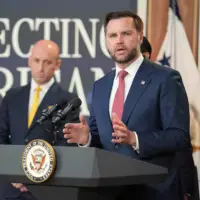
US Vice President JD Vance accused Microsoft of taking advantage of the immigration system, pointing to company layoffs alongside its use of foreign-worker visas and green cards.
Vance said Microsoft laid off approximately 6,000 American workers last year while benefiting from 6,300 H-1B temporary worker visas and nearly 3,000 green cards.
Microsoft, however, said approximately 80% of the H-1B applications it filed during the previous fiscal year involved extending or changing the status of existing employees rather than hiring new workers. The company also stated that it pays H-1B employees the same as other employees performing comparable work.
Microsoft announced plans to cut approximately 4,800 jobs in July 2026.
The company is the largest filer of applications under the permanent labor certification, or PERM, process, according to US Department of Labor data.
Under PERM, employers generally must demonstrate that hiring a foreign worker will not adversely affect the wages and working conditions of similarly employed US workers.
Major Indian IT Companies Also Affected
US Labor Department official Keith Sonderling said the suspension also covers several major IT outsourcing and consulting companies, including:
- Cognizant
- Infosys
- Tata Consultancy Services (TCS)
- Wipro
- HCL Technologies
- Capgemini
Sonderling said the government would not accept new or process pending permanent labor certification applications involving the affected companies.
According to officials, the companies had sought nearly three million foreign workers since 2009, receiving more than 230,000 H-1B visa approvals and over 100,000 permanent labor certifications.
The measures could create additional uncertainty for technology companies that rely on international talent to support software development, consulting, cloud computing and other technology services.
India's IT industry body, Nasscom, said Indian technology companies operating in the United States had already reduced their dependence on H-1B visas and that relatively few employees pursued green cards through the PERM process.
What Is the PERM Green Card Program?
The PERM process is a key step in many employment-based green card applications in the United States.
It generally requires employers to obtain labor certification from the Department of Labor before proceeding with certain employment-based immigration petitions. The process is designed to ensure that hiring foreign workers does not adversely affect qualified American workers.
The suspension announced by the administration targets this permanent labor certification process for the named companies. It should not automatically be interpreted as a cancellation of all existing employee visas or green cards.
The administration's broader immigration measures have also included a $100,000 fee on certain new H-1B petitions for workers hired from abroad, announced in September 2025.
Nine Major US Universities Face Investigations
Alongside the corporate suspensions, the administration announced investigations into nine universities over alleged misuse of exchange-visitor visas and possible effects on American wages.
The institutions named include Harvard University, Yale University, Stanford University, Brown University and the Massachusetts Institute of Technology (MIT).
US Labor Department Inspector General Anthony D'Esposito said subpoenas had already been served. Investigators will examine whether foreign influence, improper financial relationships or visa-related violations have compromised federally funded research.
The investigations add to existing tensions between the Trump administration and several leading universities over immigration, international students and federal funding.
Harvard previously described a federal subpoena related to international students and immigration compliance as unfounded retaliation, while saying it would comply with applicable legal requirements.
Potential Economic Impact
The restrictions could affect technology companies' recruitment strategies, immigration planning and access to international expertise. Foreign professionals who depend on employer-sponsored permanent residency may face additional uncertainty if their applications are covered by the suspension.
Universities could also face consequences if the investigations lead to changes in visa administration or research funding. International students contribute to the US economy through tuition payments, living expenses and participation in research and technology industries.
Sarah Spreitzer, a vice president at the American Council on Education, warned that the investigations could have a significant economic impact. She noted that international students historically spent approximately $40 billion annually in the United States.
The ultimate effects will depend on how the administration implements the restrictions, how long the suspensions remain in place and whether affected companies or institutions challenge the measures.
What Happens Next?
Vice President Vance said the suspensions would remain in effect for as long as necessary, with the administration seeking changes in how companies recruit and employ foreign workers.
For Microsoft, Adobe and the affected IT services firms, the immediate challenge is understanding the restrictions and their implications for current and future immigration applications.
For international technology professionals, the announcement underscores the importance of distinguishing between temporary work visas, permanent labor certification and approved green cards, as each has different legal requirements and consequences.
The policy could also influence how multinational technology companies distribute hiring, investment and research activities across the United States and other markets as immigration rules continue to evolve.
Read more: Wealth Orbit Center
- Oil Prices Surge 4% to One-Week High as Middle East Tensions Escalate
- Charlie Munger: The Psychology, Mental Models, and Principles Behind Great Investing
- Steve Jobs: The Psychology and Principles Behind Creating a Better Company
- Blockchain Technology: A Complete and Detailed Explanation
- Warren Buffett’s Trading Psychology: The Mindset Behind His Investing Success
- EU Proposes Unprecedented Associate Member Status for Canada